Standards of care, cerebral palsy and hips; what’s the deal?
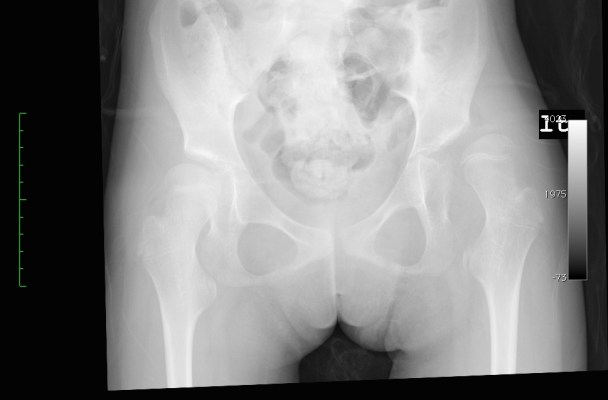
hip subluxation
For a while now I’ve been puzzled why some countries have recognized the need for targeted proactive care in populations with disability while others still lag behind. I remember reading somewhere that there is about 12 years between the “Aha!” moment of a significant finding and when the information is put into action in a consistent manner. Still, it seems to take some groups much longer than others- way past those 12 years. I’m sure there are entire college degrees centered on this one topic. So, why does that time frame seem to persist? It seems by now we should be able to speed up the process, right?
If you have read any of my posts before you may know I am a pediatric physical therapist. My life is full of wonderful children and their amazing parents. Many of them have some extra challenges, but I came to understand years ago that a person with a disability is just like everyone else. They make jokes, have friends, love their family, roll their eyes as teenagers, and all the other daily stuff…. PLUS. They are on the same trip, and in the same bus we are all in as we travel through life. The big PLUS is that they usually have to find a way around or through some pretty big road blocks while a large number of us just roll on past without having to give them any thought.
Unfortunately, one of those big obstacles pops up in health care. Prevention is a pretty commonplace notion now, and your last visit to the doctor probably included some questions, suggestions, or even an intervention for diabetes, breast cancer, heart disease, or osteoporosis risk.
But, did you know this does NOT routinely happen during doctors visits for those with a significant disability? Odd isn’t it? Having a disability doesn’t preclude you from all those other things (although I think that would be only fair, don’t you? ), so why are the left out?
In addition, there are some things WE KNOW are MORE likely to occur in people with a disability, and yet, they aren’t addressed either. For example, in children who have cerebral palsy with spasticity, one of the biggest problems is hip joint degradation and instability as they grow older. There is a huge body of evidence on the subject, and it has been tracked for years. Do a general web search on hip subluxation and CP and you will be swimming in journal articles. You can find etiology, prevalence, intervention, impact on health and quality of life – you name it and it is there. The overall story though is that hip joints in children with spastic CP who have difficulty walking (or are not able to walk), tend to sublux and deteriorate as they age. This leads to instability and probable pain, and in later stages has little likelihood of successful treatment (rebuild of the hip joint and/or reduction of pain). In some cases the only thing left to do is a surgery of last resort- complete removal of the head of the femur (the ball portion), which means no more standing or walking.
The problem was succinctly put by Wynter, et al. in 2011 (29) and beautifully restated by Dr. Shore in 2012, “Progressive lateral hip displacement in children with spastic hip disease is common and can progress silently. Clinical examination alone is not a sensitive enough measure to detect early hip displacement. Hip surveillance programs identify critical early indicators of progressive hip displacement, and early detection and appropriate surgical intervention of spastic hip displacement can prevent hip dislocation and the need for more invasive surgery.”
Common sense would tell you that checking hip status would be part of normal preventative care then, right? Wrong!
Thankfully, some individuals, groups, institutions, cities, even countries recognized this as a problem years ago and decided to do something about it. An orthopedic surgeon in Australia, passionate about helping the children he sees, lit the fire there and a group of likewise people joined him. The outcome was a hip screening protocol, including suggested interventions and their timing, that went nationwide!
After the implementation, the rate of hip subluxation dramatically decreased, as did the related secondary complications. Physicians in Belgium soon followed, as did some in England, and the US (to name a few places). Unfortunately though, that is where this story stops in the United States. While there are some excellent pediatricians, therapists and surgeons trying to get it right, there are many who still either don’t know or refuse to implement this basic measure. Why? Is it that they see only the disability and not the child, or that there is a barrier to routine implementation? This seems a no-brainer to me, and I confess I am baffled.
Children and adults with cerebral palsy are receiving less than optimal care. Is that really the best we can do? Why isn’t there a US Hip Protocol and Hip Consensus Statement that is used consistently and uniformly across the country?
I encourage parents to look at the Australian Standards of Care; Hip Consensus Statement, found within this blog. Print it. Take it with you to your child’s pediatrician the next time you go. Ask questions. Be proactive. Help spread the word.
For those here in the United States, there ARE great people and places who know what this is. Henry Chambers, MD at Rady Children’s in San Diego, California; Freeman Miller, MD at DuPont Children’s in Wilmington, Delaware; Benjamin Shore, MD at Children’s Hospital in Boston; Joseph Dutkowsky, MD at Cornell in New York (just to name a few). Do your homework, your child deserves it. If you can’t find answers, send them email. You can usually find their professional contact information either at the beginning or the end of research they have published. Incredibly, they will answer!
Bibliography
The role for hip surveillance in children with cerebral palsy
Benjamin Shore, David Spence, and HK Graham
Curr Rev Musculoskelet Med. Jun 2012; 5(2): 126–134.
Published online Mar 20, 2012. doi: 10.1007/s12178-012-9120-4
1. Bax M, Goldstein M, Rosenbaum P, et al. Proposed definition and classification of cerebral palsy, April 2005. Dev Med Child Neurol. 2005;47:571–576.
2. Soo B, Howard JJ, Boyd RN, et al. Hip displacement in cerebral palsy. J Bone Joint Surg Am. 2006;88:121–129.
3. Lonstein JE, Beck K. Hip dislocation and subluxation in cerebral palsy. J Pediatr Orthop. 1986;6:521–526.
4. Bagg MR, Farber J, Miller F. Long-term follow-up of hip subluxation in cerebral palsy patients. J Pediatr Orthop. 1993;13:32–36.
5. Hagglund G, Lauge-Pedersen H, Wagner P. Characteristics of children with hip displacement in cerebral palsy. BMC Musculoskelet Disord. 2007;8:101.
6. Palisano R, Rosenbaum P, Walter S, et al. Development and reliability of a system to classify gross motor function in children with cerebral palsy. Dev Med Child Neurol. 1997;39:214–223.
7. Howard CB, McKibbin B, Williams LA, Mackie I. Factors affecting the incidence of hip dislocation in cerebral palsy. J Bone Joint Surg Br. 1985;67:530–535.
8. Terjesen T. Development of the hip joints in unoperated children with cerebral palsy: a radiographic study of 76 patients. Acta Orthop. 2006;77:125–131.
9. Flynn JM, Miller F. Management of hip disorders in patients with cerebral palsy. J Am Acad Orthop Surg. 2002;10:198–209.
10. Dobson F, Boyd RN, Parrott J, et al. Hip surveillance in children with cerebral palsy. Impact on the surgical management of spastic hip disease. J Bone Joint Surg Br. 2002;84:720–726. doi: 10.1302/0301-620X.84B5.12398.
11. Cooperman DR, Bartucci E, Dietrick E, Millar EA. Hip dislocation in spastic cerebral palsy: long-term consequences. J Pediatr Orthop. 1987;7:268–276.
12. Scrutton D, Baird G. Surveillance measures of the hips of children with bilateral cerebral palsy. Arch Dis Child. 1997;76:381–384.
13. Scrutton D, Baird G, Smeeton N. Hip dysplasia in bilateral cerebral palsy: incidence and natural history in children aged 18 months to 5 years. Dev Med Child Neurol. 2001;43:586–600.
14. Hagglund G, Andersson S, Duppe H, et al. Prevention of dislocation of the hip in children with cerebral palsy. The first ten years of a population-based prevention programme. J Bone Joint Surg Br. 2005;87:95–101.
15. Connelly A, Flett P, Graham HK, Oates J. Hip surveillance in Tasmanian children with cerebral palsy. J Paediatr Child Health. 2009;45:437–443.
16. Beals RK. Spastic paraplegia and diplegia. An evaluation of non-surgical and surgical factors influencing the prognosis for ambulation. J Bone Joint Surg Am. 1966;48:827–846.
17. Samilson RL, Carson JJ, James P, Raney FL., Jr Results and complications of adductor tenotomy and obturator neurectomy in cerebral palsy. Clin Orthop Relat Res. 1967;54:61–73.
18. Wynter M, Gibson N, Kentish M, et al. The development of Australian Standards of Care for Hip Surveillance in Children with Cerebral Palsy: How did we reach consensus? J Pediatr Rehabil Med. 2011;4:171.
19. Kentish M, Wynter M, Snape N, Boyd R. Five-year outcome of state-wide hip surveillance of children and adolescents with cerebral palsy. J Pediatr Rehabil Med. 2011;4:205–217.
20. Gordon GS, Simkiss DE. A systematic review of the evidence for hip surveillance in children with cerebral palsy. J Bone Joint Surg Br. 2006;88:1492–1496.
21. Cornell MS, Hatrick NC, Boyd R, et al. The hip in children with cerebral palsy. Predicting the outcome of soft tissue surgery. Clin Orthop Relat Res. 1997;340:165–71.
22. Letts M, Shapiro L, Mulder K, Klassen O. The windblown hip syndrome in total body cerebral palsy. J Pediatr Orthop. 1984;4:55–62.
23. Graham HK. Painful hip dislocation in cerebral palsy. Lancet. 2002;359:907–908.
24. Sharrard WJ, Allen JM, Heaney SH. Surgical prophylaxis of subluxation and dislocation of the hip in cerebral palsy. J Bone Joint Surg Br. 1975;57:160–166.
25. Dunlap K, Shands AR, Jr, Hollister LC, Jr, et al. A new method for determination of torsion of the femur. J Bone Joint Surg Am. 1953;35-A:289–311.
26. Laplaza FJ, Root L, Tassanawipas A, Glasser DB. Femoral torsion and neck-shaft angles in cerebral palsy. J Pediatr Orthop. 1993;13:192–199.
27. Robin J, Graham HK, Selber P, et al. Proximal femoral geometry in cerebral palsy: a population-based cross-sectional study. J Bone Joint Surg Br. 2008;90:1372–1379.
28. Cooke PH, Cole WG, Carey RP. Dislocation of the hip in cerebral palsy. Natural history and predictability. J Bone Joint Surg Br. 1989;71:441–446.
29. Wynter M, Gibson N, Kentish M, et al. The consensus statement on hip surveillance for children with cerebral palsy: australian standards of care. J Pediatr Rehabil Med. 2011;4:183–195.
30. Graham HK, Boyd R, Carlin JB, et al. Does botulinum toxin a combined with bracing prevent hip displacement in children with cerebral palsy and “hips at risk”? A randomized, controlled trial. J Bone Joint Surg Am. 2008;90:23–33.
31. Hodgkinson I, Jindrich ML, Duhaut P, et al. Hip pain in 234 non-ambulatory adolescents and young adults with cerebral palsy: a cross-sectional multicentre study. Dev Med Child Neurol. 2001;43:806–808.
 MoveWelldotme
2 Responses to “Standards of care, cerebral palsy and hips; what’s the deal?”
As an adult with spastic hemiplegia who has now had to go through two hip surgeries – one a complete total hip replacement and then a hip replacement revision surgery, I thank you for this article. I had been walking around with my hip partially dislocated and reduced to bone on bone for years without knowing it. Recovering from both surgeries was NOT fun, and due to spasticity issues that are still ongoing it has been making a total recovery a difficult challenge.
Having knowledge and information about CP and hip replacements would be something that would help A LOT of people.
Hi Amy,
I have been thinking about you for quite a while, and can’t thank you enough for your comment. I hope you are still doing well, and that your hip surgeries have given you both relief, and greater freedom to go places without pain.
I am very curious to know your take on hip replacement surgery, who did it, and if you feel it was beneficial. Freeman Miller, MD has been doing this surgery for a while, but I have not had the opportunity to discuss outcomes with him. Your firsthand knowledge would be great to have.
Do you think you would have needed the replacement if your hip status had been monitored when you were younger, and you were given pro-active options for maintaining/preserving the joint? Why do you think this was not done?
Well, thanks again for reading my rant.
Deirdre